

 عربى
NEWS
Home / News / Industry News / how is cotton thread made: Applications, Selection Criteria, and Practical Guidance
75/36 100% elastic yarn 20D Denier air-wrapped yarn: innovative technology improves fabric breathability
Jun 06,2025
Unraveling the Durability: Why Polyester Embroidery Thread Reigns Supreme
Jun 06,2025
The power of nonwovens: how non-woven fabrics impact modern life
Jun 06,2025
From strength to protection: Nylon cable performance and selection guide for various applications
Jun 06,2025
Creative Ways to Incorporate Sequin Yarn into Clothing Designs for Stunning Visual Effects
Jun 06,2025Content
A spool of cotton thread looks simple enough, yet behind it sits one of the oldest continuous manufacturing chains in the world. Cotton has been spun into yarn for thousands of years, and although the machinery has changed beyond recognition, the sequence has barely moved: fibre is opened, cleaned, aligned, drafted, twisted, plied, finished and wound. Working with yarn every day gives us a certain affection for this process, so we thought it would be worth walking through the whole route from boll to bobbin, and explaining what separates a thread that behaves beautifully from one that merely looks the part.
Almost everything about a finished cotton thread is decided long before the first spindle turns. Cotton is a seed hair, and each individual fibre is a flattened tube of cellulose with natural twists running along its length, known as convolutions. Those twists are what allow fibres to grip one another when twisted into yarn.
Staple length matters enormously. Upland cotton typically runs somewhere between 22 and 32 mm, while long-staple and extra-long-staple varieties can stretch well beyond that. Fineness, maturity, strength and trash content all sit alongside length in determining what a bale can realistically become. Long, mature, clean cotton can be spun fine and strong. Short, immature, trashy cotton cannot be rescued by even the most sophisticated machinery, which is why spinners are so particular about where their raw material comes from.
After harvest, seed cotton travels to a gin. Saw gins use circular blades to pull lint away from the seed, while roller gins work more gently and preserve fibre length, which is why long-staple cotton is usually roller ginned. The output is a pressed bale weighing roughly 220 kilograms.
Each bale is then classed on staple length, micronaire, strength, colour and leaf grade. That data follows the bale into the spinning mill and determines how it will be blended with others, a quiet but decisive step in producing a consistent thread.
Bales from different growths are laid down side by side in a mix, and the layers are plucked vertically so that the blend is even. Openers and beaters then break up compressed lumps and shake out heavy trash, sand and leaf. Blending at this stage smooths over natural variation between bales, which is exactly what keeps a thread shade and character stable across months of production.
Carding is the moment cotton stops being a loose mass and becomes a continuous strand. Fibres pass through a series of wire-covered cylinders that separate them individually, lift out neps and fine trash, and lay them into a soft rope called card sliver. From this point onward the fibre has a direction, and the yarn's future is largely set.
Combing is optional but important. A combing machine removes short fibres below a set threshold and straightens the remainder, so that the fibres lie parallel. Only a modest proportion of the input is combed out, yet the gain is considerable: combed yarn is smoother, stronger, less hairy and far better suited to fine counts. It also costs more, which is why carded and combed threads occupy different positions in the market.
| Property | Carded cotton thread | Combed cotton thread |
|---|---|---|
| Short fibre content | Higher, left in place | Low, combed out |
| Surface | Slightly fuzzy | Smooth and clean |
| Tensile strength | Good | Higher for the same count |
| Cost | Economical | Premium |
| Typical uses | General sewing, utility work | Embroidery floss, fine machine thread |
Card or comb sliver still carries far too much variation to be spun directly. Drawing frames feed six to eight slivers together, draft them thinner, and combine the result again and again. Thick places and thin places average one another out, and the fibre alignment improves with each passage.
The drawn sliver then moves to roving, where it is attenuated to roughly one-eighth of its previous weight and given a light twist to hold it together before being wound onto a roving bobbin. It is still fragile at this stage, but it is finally ready for the spinning frame.
The classic route. Roving is drafted down to its final count, then twisted as the yarn passes through a traveller circulating on a ring, and wound onto a bobbin. Ring spinning is comparatively slow, but it produces a strong, clean, well-ordered yarn that takes ply twisting beautifully, which is why most quality sewing and embroidery threads are ring spun.
Rotor spinning individualises fibres and reassembles them inside a rapidly rotating rotor, inserting twist from the outside in. It runs several times faster than ring spinning and gives very even yarn, though with somewhat lower tenacity and a bulkier hand. It suits coarser counts and high-volume output. Air-jet spinning takes speed even further, with its own trade-offs in strength and softness.
Single yarn is almost never sold as sewing thread. Two, three or more singles are twisted together to form a ply, which balances the torque stored in each component and produces a rounder, stronger, more stable thread. If the singles carry a Z twist, the ply usually takes an S twist; the opposing directions lock the structure and stop the finished thread from curling as it leaves the needle.
This is where the familiar numbering comes in. A designation such as 40/2 means a 40 cotton count single twisted from two plies, and a higher count number denotes a finer single. Twist level itself is carefully judged, since too little leaves a weak thread and too much makes it lively and prone to kinking. Textured constructions take a different path altogether, with a shaped or wavy profile built in during plying rather than a smooth parallel bundle.
The thread is drawn rapidly through a gas flame, which singes off protruding fibre ends. The result is a smooth, low-hairiness thread with a soft sheen, a finish many people associate with traditional hand-sewing cotton.
Under tension, cotton is treated with caustic soda. The fibre swells, its cross-section rounds out, and the thread gains lustre, tensile strength and a markedly greater affinity for dye. Mercerized cotton is the reason some threads look almost silk-like while remaining pure cotton.
For white and pastel shades, natural waxes and pigment are removed before dyeing so that colour sits cleanly and evenly across the lot.
Dyeing method follows the product form. Hank or skein dyeing gives the relaxed, lofty character that hand embroidery floss is prized for, while package dyeing pushes dye through yarn wound on perforated cones and suits machine thread. Reactive dyes build strong covalent bonds with cellulose and are the usual choice for wash-fast cotton; vat dyes offer outstanding light fastness for demanding applications.
Matching shades is its own craft. A dyer works against a reference swatch under controlled lighting, adjusting recipe and dwell time, then confirms the batch against the standard before it is released. Consistency across repeat orders often matters more to a customer than absolute precision on a single lot.
Finally the thread is wound into the package the customer actually uses: large cones for high-speed industrial machines, smaller spools for domestic sewing, and pre-filled bobbins for embroidery machines that need a bottom thread matched to the top. Winding is not passive housekeeping; tension, traverse and density must be controlled so the thread unwinds without snagging, and so that a full cone does not collapse under its own weight.
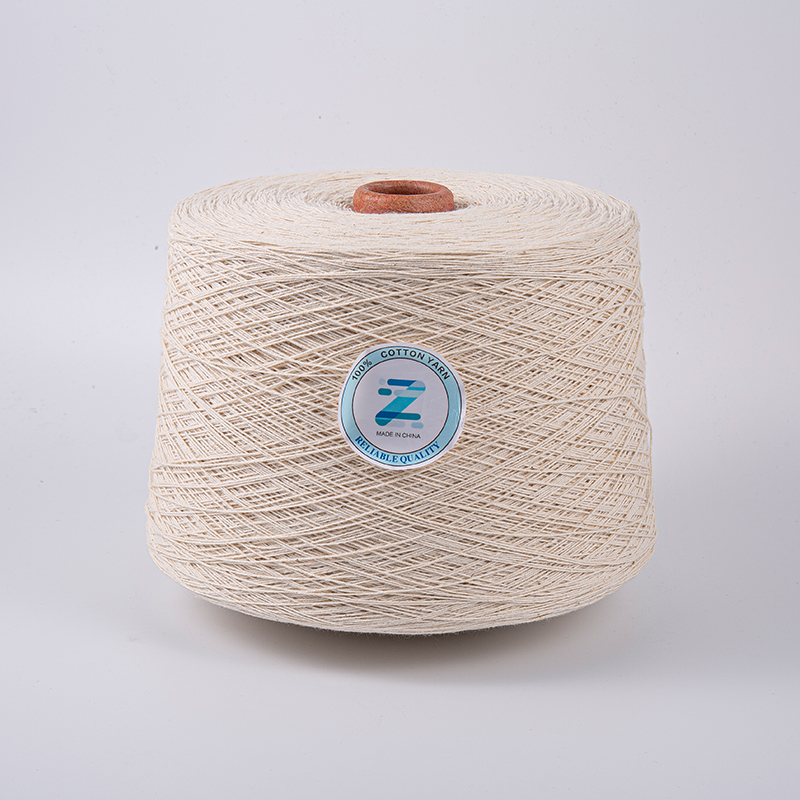 100% Natural Cotton Cone Yarn for SewingCone-wound 100% natural cotton yarn described for sewing and textile use, with moisture absorption suited to summer clothing, underwear, baby clothing and bedding.View Product →
Good mills test, and good buyers ask for the numbers. The essentials include:
Cotton has qualities that polyester simply cannot imitate: a matte, natural surface, a soft hand, breathability and excellent stitch definition on fabric. A six-strand cotton embroidery floss splits cleanly, blends into the ground cloth and gives the slightly softened finish that traditional surface work is known for.
For counted thread work the priorities shift a little, towards even diameter, low fuzz and reliable colour repetition from skein to skein, because a single project may call on the same shade weeks apart. Our guide to cross stitch and hand embroidery threads covers those choices in more detail, including where mercerised cotton makes a visible difference and where it does not.
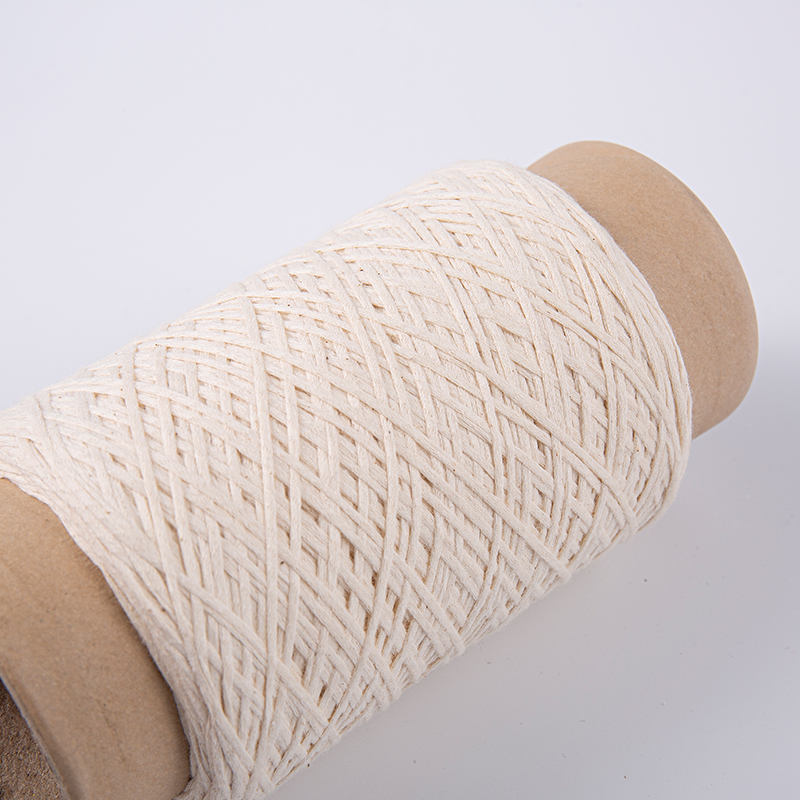 Cotton Yarn Crochet Thread for Fine PatternsSoft, flexible cotton crochet thread presented for knitting and crochet, described as resisting breakage and deformation so delicate patterns and larger projects keep their shape.View Product →
Making cotton thread is really a long exercise in removing doubt. Every stage, from ginning through combing, drafting, twisting, mercerising and winding, exists to make the next metre behave exactly like the last. That is the quiet promise of a good spool, and it is the standard we try to hold ourselves to when we talk with customers about what their machines, their fabrics and their finishing processes genuinely need.
how do embroidery hoops work: Applications, Selection Criteria, and Practical Guidance
2026-11-05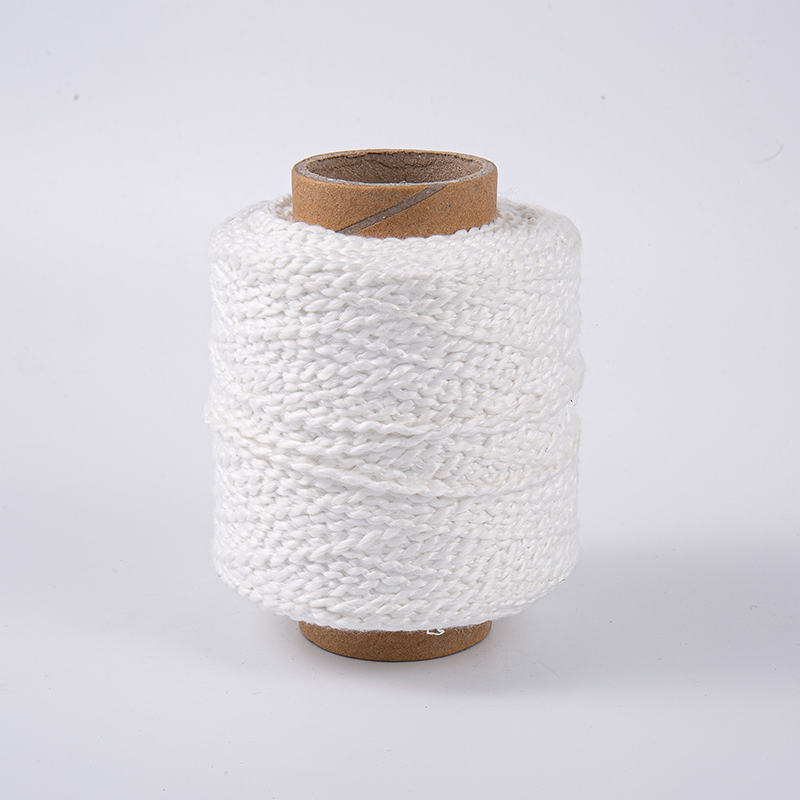
How Does Embroidery Work? A Friendly Guide to Stitches, Threads, and Machines
2026-11-12Your email address will not be published. Required fields are marked *
*Indicates a required field
Copyright © Shaoxing Qiufei Textile Technology Co., Ltd.  Custom Embroidery Thread Yarn Manufacturers