

 عربى
عربىNEWS
Home / News / Industry News / How Big Should a Pocket Logo Be? A Practical Guide for Embroidered Logos
75/36 100% elastic yarn 20D Denier air-wrapped yarn: innovative technology improves fabric breathability
Jun 06,2025
Unraveling the Durability: Why Polyester Embroidery Thread Reigns Supreme
Jun 06,2025
The power of nonwovens: how non-woven fabrics impact modern life
Jun 06,2025
From strength to protection: Nylon cable performance and selection guide for various applications
Jun 06,2025
Creative Ways to Incorporate Sequin Yarn into Clothing Designs for Stunning Visual Effects
Jun 06,2025Content
A pocket logo is the smallest canvas most embroidery ever gets, yet it often carries the biggest branding load. On a uniform, a polo, or a dress shirt, those few inches of stitching are what clients and colleagues read first. As a thread maker working daily with uniform manufacturers and embroidery workshops, we can tell you that the question "how big should a pocket logo be" is really three questions in one: how large the design should physically be, how much detail it can survive at that size, and where exactly it should sit. Answer all three, and even a modest logo looks deliberate and professional.
For most adult garments, an embroidered chest logo works best between 2 and 4 inches (5-10 cm) wide, and 2.5 to 3.5 inches is the dependable middle ground. When the design is stitched directly onto a sewn-on pocket, the pocket itself sets the ceiling. A standard dress or work-shirt pocket runs roughly 5.5 to 6 inches across, so pocket logos usually land between 1.5 and 2.5 inches wide and 1 to 2 inches tall, with at least a quarter inch, ideally half an inch, of clear fabric on every side. The ranges below are the ones we see specified most often.
| Placement | Recommended width | Recommended height | Key margin rule |
|---|---|---|---|
| Logo stitched on a shirt pocket | 1.5-2.5 in (4-6.5 cm) | 1-2 in (2.5-5 cm) | Leave 0.25-0.5 in clear of pocket edges |
| Left chest, no pocket | 2.5-3.5 in (6-9 cm) | 2-3 in (5-7.5 cm) | Keep 4-6 in in from the center placket |
| Polo shirt left chest | 2.5-3 in (6-7.5 cm) | 2-2.5 in (5-6.5 cm) | Simplify fills on textured pique knit |
| Cap front, for comparison | 2.25-2.5 in (5.5-6.5 cm) | 1.5-2 in (4-5 cm) | Respect the curve of the panel |
Notice that every recommended size is wider than it is tall. Chest-height designs read as balanced when the width-to-height ratio sits near 3:2, which is why so many company marks are horizontal. A tall, narrow logo at chest level tends to look like a name badge instead of a brand. If one design must serve a size run from small to 3XL, keep the logo a constant size; it is the placement measurements, not the artwork, that flex slightly between sizes.
Size means little without position. Decorators work from two fixed reference points: down from the shoulder seam where it meets the collar, and across from the center placket. On an adult shirt, the top of a left-chest design typically sits 6 to 9 inches below that shoulder point, with 7.5 inches as a safe default, and about 4 to 6 inches in from the center line. On button-up shirts, always confirm that the placket and its buttons will not crowd the finished design.
When the logo goes on the pocket itself, center it horizontally and keep it clear of the top hem; roughly 1 to 1.5 inches of pocket fabric above the design keeps the layout comfortable. Before digitizing, print the artwork at 100 percent scale, pin it to the garment, and check it in a mirror. Ten minutes with a paper template prevents the most expensive mistake of all: a finished shirt that cannot be corrected.
Every size reduction costs detail. At the standard 40 weight thread most shops run, lettering below about 0.25 inches (6 mm) tall starts to close up, and taglines under that height are usually better left off a pocket logo entirely. Thin outlines, fine serifs, and tightly spaced letters suffer first. If a design must shrink, widen the letter spacing, thicken the strokes in the digitized file, and drop the smallest elements rather than letting them stitch into an unreadable patch of color.
Stitch count is the other hidden constraint. A typical 2 by 2 inch chest logo runs in the neighborhood of 4,000 to 8,000 stitches depending on coverage, while a compact pocket version often lands between 2,500 and 5,000. Textured knits such as pique swallow fine detail, so scale the design up or simplify it. Our guide to embroidery thread thickness explains how thread diameter changes what small lettering can hold.
The right thread can make a two-inch logo read larger than its measurements. Three decisions matter most: the top thread weight, the finish, and the bobbin.
Forty weight polyester, equivalent to a 120D/2 construction, is the industry default for chest and pocket logos. It offers a clean sheen, survives repeated industrial laundering, and runs reliably at high machine speeds. For most company apparel programs, we point buyers to our:
 Polyester Filament Embroidery Thread 120D/2A 40-weight, 120D/2 polyester filament thread suited to standard chest and pocket logos. Its smooth filament construction resists breakage and keeps lines neat through repeated industrial laundering.View Product →
Once text drops toward 4 or 5 millimeters, a finer 60 weight thread keeps individual columns from merging into one another. A 108D/2 polyester filament is the classic choice for miniature monograms and pocket-size taglines, and its lower bulk is kinder to lightweight shirting. When a design sits right at the edge of legibility, we usually spec our:
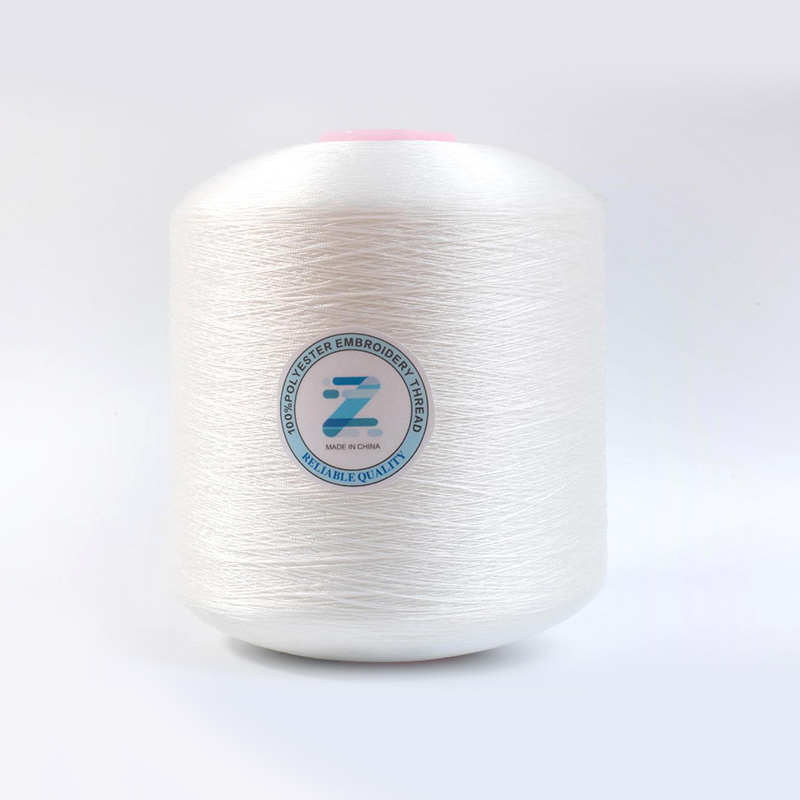 108D/2 100% Polyester Embroidery Thread for MachinesA finer 60-weight thread for small monograms and 4-5 mm lettering, where lower bulk keeps columns from merging. Available in various colors and gentle on lightweight shirting fabrics.View Product →
On a chest logo, the back of the design rests against the wearer all day, so bobbin quality is never a detail to ignore. A consistent 150D polyester bobbin keeps the reverse smooth, protects stitch tension, and stops scratchy tails from working through fine fabrics. Pair it with tear-away backing on woven dress shirts and cut-away on stretchy pique knits, and the face of the logo stays crisp wash after wash. Many workshops standardize on our:
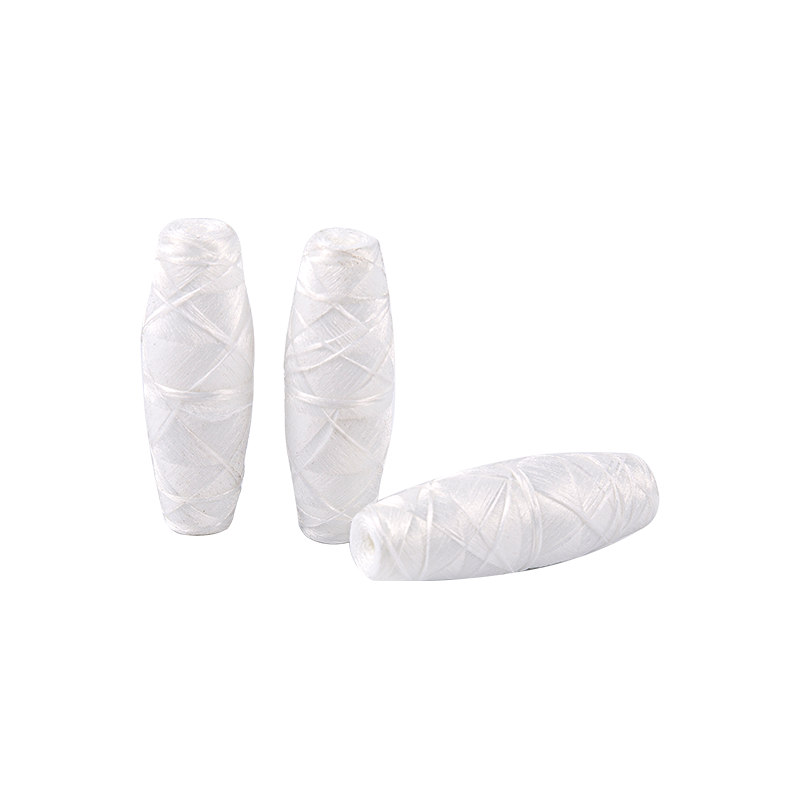 150D Polyester Bobbin Thread P10A smooth 150D polyester bobbin thread that keeps the back of chest logos comfortable and protects stitch tension. Its low-friction surface runs reliably at high speeds with fewer breaks.View Product →
Some uniform programs rotate garments too often for direct embroidery to stay economical. In that case, a sewn-on patch sized to the pocket, usually 2 to 2.5 inches wide with a clean merrowed border, gives the same visual footprint and can move from shirt to shirt. Patch construction has its own thread requirements, which we cover in our guide to patch and emblem thread.
After years of troubleshooting customer samples, these are the errors we see most often:
However you size it, a pocket logo succeeds on consistency. Fifty shirts with identical placement and identical thread color read as one brand; fifty near-misses read as fifty accidents. That is the part we care about most at our factory: embroidery thread with tight shade control and stable strength, run after run, so the logo you approved is the logo every garment ships with. If you are building a new uniform program, our team is glad to help match thread weights and shades to your artwork and fabric.
Your email address will not be published. Required fields are marked *
*Indicates a required field
Copyright © Shaoxing Qiufei Textile Technology Co., Ltd.  Custom Embroidery Thread Yarn Manufacturers