

 عربى
عربى
Content
- 1 What Is Quilt Tying and When Should You Use It
- 2 Polyester vs Rayon Embroidery Thread: Which Is Better for Quilt Tying
- 3 What You Need Before You Start Tying
- 4 Step-by-Step: How to Tie a Quilt with Embroidery Thread
- 5 Choosing the Right Thread Weight and Strand Count
- 6 Tie Placement Strategies for Different Quilt Patterns
- 7 Tips Specific to Using Polyester Embroidery Thread
- 8 Tips Specific to Using Rayon Embroidery Thread
- 9 Common Mistakes and How to Avoid Them
- 10 Care Instructions for Quilts Tied with Embroidery Thread
- 11 Creative Variations: Making the Ties a Design Feature
To tie a quilt with embroidery thread, use a length of thread approximately 24 inches, push it through all quilt layers with a sharp needle, and secure it with a square knot pulled tight against the quilt surface. For most quilts, polyester embroidery thread offers the best durability, while rayon embroidery thread delivers superior sheen for decorative or heirloom projects.
Quilt tying is one of the fastest and most beginner-friendly ways to finish a quilt — far quicker than machine or hand quilting. A standard twin-size quilt can be fully tied in 2 to 4 hours, making it ideal for utility quilts, charity projects, and baby quilts. This guide covers everything from thread selection to finishing knots, with specific guidance on using both polyester and rayon embroidery thread.
What Is Quilt Tying and When Should You Use It
Quilt tying is a finishing technique where threads or yarn are passed through all three quilt layers — top, batting, and backing — and knotted to hold everything together. Unlike quilting stitches that run in continuous lines or patterns, ties are individual anchor points spaced evenly across the quilt surface.
Tying is especially well-suited for:
- Thick or high-loft batting that is difficult to hand quilt through
- Utility quilts, children's quilts, and charity donations where speed matters
- Quilts made with delicate or decorative fabrics where dense stitching would be disruptive
- Beginner quilters learning to finish their first project
- Projects where the decorative knot or bow becomes part of the visual design
Ties should be spaced no more than 4 to 6 inches apart for polyester batting and no more than 3 inches apart for looser wool or cotton batting — closer spacing prevents bunching and shifting during washing.
Polyester vs Rayon Embroidery Thread: Which Is Better for Quilt Tying
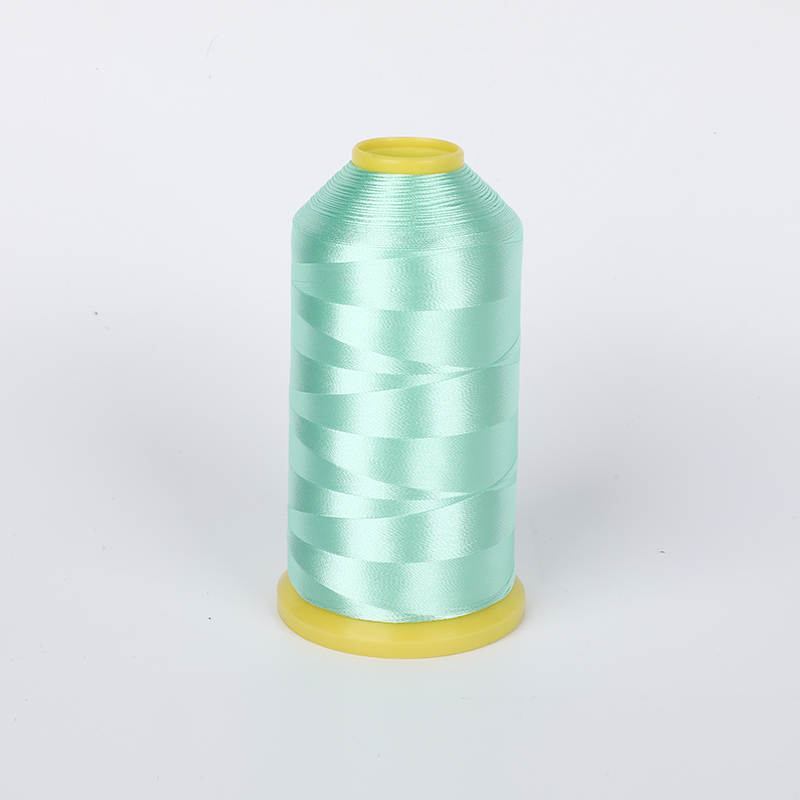
Both polyester and rayon embroidery threads are available in hundreds of colors and produce beautiful ties, but they perform very differently under real-use conditions. Understanding these differences helps you match the thread to your project's purpose and longevity requirements.
| Property | Polyester Embroidery Thread | Rayon Embroidery Thread |
|---|---|---|
| Strength | Very high — resists breakage under tension | Moderate — can fray or snap if pulled hard |
| Sheen | Subtle to moderate | High — closest to silk appearance |
| Colorfastness | Excellent — does not fade with washing | Good — may fade slightly over time |
| Washability | Machine wash safe at most temperatures | Gentle wash recommended; may weaken with heat |
| Texture | Smooth, slightly firm | Soft, silky, fluid drape |
| Knot security | Excellent — holds square knots firmly | Good — may require an extra half-hitch |
| Best use case | Everyday quilts, children's quilts, charity quilts | Decorative quilts, heirloom pieces, display quilts |
| Price range | $2–$6 per spool (500m) | $3–$8 per spool (500m) |
Polyester embroidery thread is the recommended choice for most quilt tying projects due to its superior knot strength, colorfastness, and machine-wash durability. Rayon embroidery thread excels when the visual impact of a shiny, decorative tie is the design priority — particularly on wall hangings or quilts that won't be laundered frequently.
What You Need Before You Start Tying
Gathering the right tools before you begin saves time and ensures consistent, secure ties throughout the project.
- Embroidery thread: Polyester or rayon, 6-strand floss is most common; use all 6 strands together for a bold, visible tie
- Chenille or tapestry needle: Size 18–24 with a large eye; must accommodate 6 strands and pass through all quilt layers
- Sharp scissors: For clean cuts that prevent fraying at thread ends
- Water-soluble fabric marker or chalk: To mark tie placement on the quilt top
- Ruler or measuring tape: To space ties evenly, typically every 4–6 inches
- Basted quilt sandwich: Top, batting, and backing pinned or basted together before tying begins
- Thimble (optional): Useful for pushing the needle through thick batting layers
For a queen-size quilt using 4-inch tie spacing, you will need approximately 150 to 200 individual tie points. Pre-cutting your thread into 24-inch lengths before you sit down to tie will speed up the process considerably.
Step-by-Step: How to Tie a Quilt with Embroidery Thread
Follow these steps for clean, secure ties that will hold through repeated washing and heavy use.
Step 1 — Prepare and Mark Your Quilt
Lay your basted quilt flat on a large table or clean floor. Using a ruler and fabric marker, mark the tie locations across the quilt top. Place marks at block intersections, quilt center points, or in a uniform grid — whichever aligns with your design. Ensure no two marks are more than 6 inches apart.
Step 2 — Thread the Needle
Cut a length of embroidery thread approximately 24 inches long. Thread all 6 strands through the needle eye without knotting the end. For rayon thread, threading may be easier if you slightly dampen the thread tip before pushing it through the needle.
Step 3 — Push Through All Layers
At your first marked point, push the needle straight down through all three quilt layers — top, batting, and backing. Pull the thread through, leaving a 3-inch tail on the top surface. Then bring the needle back up through the layers approximately ¼ inch away from your entry point. You now have two thread tails on the quilt top.
Step 4 — Tie a Square Knot
A square knot is the most secure and recommended knot for quilt tying. Tie it as follows:
- Cross the right tail over the left tail and pull through — first half of the knot
- Cross the left tail (now on the right) over the right tail and pull through — second half
- Pull both tails firmly and evenly to snug the knot flat against the quilt surface
- Do not tie a bow unless decorative tying is specifically intended
A common mistake is tying a granny knot instead — this is two half-hitches in the same direction, which slips loose over time. Always reverse the direction on the second half to create a true square knot.
Step 5 — Trim the Tails
After knotting, trim both tails to an even length. Standard tie tails are ½ inch to 1 inch long for a clean finish. For a more decorative appearance, tails can be left at 1.5 to 2 inches. With polyester thread, tails hold their shape well; rayon tails may fray slightly at the ends, which some quilters find adds to the decorative appeal.
Step 6 — Move to the Next Tie Point
Rather than cutting thread after every single tie, experienced quilters use a continuous threading technique: after each knot, move the needle to the next mark without cutting, pulling the thread loosely across the surface. Once you've completed a row of ties, cut the connecting threads and trim all tails at once. This method can reduce your total tying time by 30 to 40% on large quilts.
Choosing the Right Thread Weight and Strand Count
Standard embroidery floss comes in 6-strand skeins. The number of strands you use affects the visual weight of the tie and the strength of the knot.
- 2–3 strands: Subtle, nearly invisible tie; good for quilts where you want to minimize the knot's visual presence
- 4–6 strands: Standard tie; most commonly used; visible but not overpowering
- All 6 strands doubled (12 total): Bold, decorative tie; best for quilts where the knot is a design element
For polyester embroidery thread, using all 6 strands together provides the strongest knot with minimal risk of breakage. For rayon embroidery thread, 4 to 6 strands offers the best balance of sheen and structural integrity — using more can cause the rayon to bunch and reduce knot tightness.
Tie Placement Strategies for Different Quilt Patterns
Where you place your ties affects both the structural integrity of the quilt and its visual appearance. There are three main placement strategies:
At Block Intersections
Placing ties at seam intersections — where four quilt blocks meet — is the most common method for patchwork quilts. It aligns the tie visually with the quilt structure and distributes tension evenly across seams. This typically results in a natural grid spacing of 6 to 12 inches depending on block size.
In Block Centers
Tying at the center of each block works well for quilts with large plain blocks or simple designs like nine-patches. Center placement avoids disrupting pieced seams and creates a clean, symmetrical look.
Uniform Grid Tying
For whole-cloth quilts or quilts with irregular patterns, a uniform 4-inch grid ensures every area of the quilt is equally secured regardless of the design. Mark the grid with a disappearing fabric pen and follow it methodically from one corner to the opposite corner.
Tips Specific to Using Polyester Embroidery Thread
Polyester embroidery thread has some unique handling characteristics worth knowing before you begin.
- Polyester has a slight static charge that can cause strands to cling together; run the thread over beeswax or a Thread Heaven conditioner to reduce tangling
- It is more resistant to cutting than cotton, so use very sharp scissors to avoid crushing the thread fibers at the cut point
- Polyester thread does not stretch significantly, which means your square knots will stay precisely where you place them without tightening further over time
- Color vibrancy is retained through 50+ wash cycles, making it ideal for children's quilts that need frequent laundering
- Avoid ironing directly over polyester thread tails at high heat — use a pressing cloth or keep iron heat below 300°F to prevent melting
Tips Specific to Using Rayon Embroidery Thread
Rayon embroidery thread requires a slightly more delicate approach but rewards careful handling with a beautiful visual result.
- Rayon is more prone to twisting and kinking — work with shorter lengths (no more than 18 inches) to minimize tangling
- Allow the needle to dangle freely between stitches occasionally to untwist the thread and preserve its smooth surface
- Rayon knots can slip slightly when dry; add a tiny dot of fabric glue or fray check to each finished knot for extra security on display quilts
- Rayon's silk-like sheen is best appreciated on solid-color or low-contrast quilt tops where the tie can catch the light without competing with busy patterns
- Hand wash quilts tied with rayon thread in cool water with a gentle detergent, and dry flat to maintain fiber integrity
Common Mistakes and How to Avoid Them
Even experienced quilters encounter problems when tying. Here are the most frequent issues and their solutions:
| Mistake | Cause | Fix |
|---|---|---|
| Knots slip loose after washing | Granny knot used instead of square knot | Always reverse direction on second half of knot |
| Batting bunches between ties | Ties spaced too far apart | Reduce spacing to 3–4 inches; re-baste if needed |
| Thread breaks while tying | Too few strands or thread is old/weak | Use fresh thread; use all 6 strands for polyester |
| Puckering around tie points | Knot pulled too tightly into the quilt top | Snug firmly but don't compress batting; use a pin to adjust before finalizing |
| Uneven tail lengths | Cutting each tie individually by eye | Use a cardboard template to guide scissors to a consistent length |
| Rayon thread fraying at ends | Natural fiber tendency; also caused by blunt scissors | Use sharp embroidery scissors; apply a tiny dab of fray sealant |
Care Instructions for Quilts Tied with Embroidery Thread
Proper care extends the life of your tied quilts and keeps the embroidery thread ties looking their best through repeated use.
Quilts Tied with Polyester Embroidery Thread
Polyester-tied quilts are the most durable and easiest to care for. Machine wash on a gentle or normal cycle in cool to warm water (up to 104°F / 40°C). Tumble dry on low heat. Polyester thread retains its color and knot integrity through heavy regular use, making these quilts appropriate for everyday use on beds, sofas, and in children's rooms.
Quilts Tied with Rayon Embroidery Thread
Rayon-tied quilts require gentler handling. Hand wash in cool water with a pH-neutral detergent, or machine wash on the delicate cycle with cold water only. Do not wring. Lay flat to dry away from direct sunlight to prevent color fading. Avoid ironing directly over rayon knots; steam from a distance if pressing is needed. These quilts are best treated as decorative or occasional-use items rather than daily-use bedding.
Creative Variations: Making the Ties a Design Feature
Tied quilts don't have to be purely functional. With thoughtful thread selection and tie style, the knots themselves become part of the quilt's aesthetic.
- Contrast color ties: Use a bold polyester thread color that contrasts with the quilt top — for example, cherry red ties on a navy and white pattern — to make each knot a visual accent point
- Bow ties: Instead of trimming knots flat, tie decorative bows using rayon thread for a soft, romantic look on baby quilts or keepsake pieces
- Tying from the back: Place knots on the backing fabric and leave tails on the underside for a cleaner, uninterrupted quilt top surface
- Multi-color tying: Use different rayon thread colors at different sections of the quilt to create a gradient or rainbow effect across the surface
- Mixed thread tying: Combine one strand of metallic thread with five strands of polyester for a subtle sparkle effect that holds securely
These variations work equally well with polyester and rayon thread, though rayon's natural luster makes bows and decorative tie styles particularly striking under both natural and artificial light.