

 عربى
NEWS
Home / News / Industry News / How to Tell the Difference Between Cotton and Polyester Thread: A Practical Guide
75/36 100% elastic yarn 20D Denier air-wrapped yarn: innovative technology improves fabric breathability
Jun 06,2025
Unraveling the Durability: Why Polyester Embroidery Thread Reigns Supreme
Jun 06,2025
The power of nonwovens: how non-woven fabrics impact modern life
Jun 06,2025
From strength to protection: Nylon cable performance and selection guide for various applications
Jun 06,2025
Creative Ways to Incorporate Sequin Yarn into Clothing Designs for Stunning Visual Effects
Jun 06,2025Content
Choosing the right thread can make or break a sewing or embroidery project. Whether you are repairing a favorite pair of jeans, stitching a quilt, or running a commercial embroidery machine, knowing whether your thread is cotton or polyester matters more than most people expect. The two fibers look similar at a glance, but they behave very differently under tension, heat, and long-term use. As a thread manufacturer with decades of sourcing and production experience, we often see customers struggle with this exact question. Labels are helpful, but many spools arrive unmarked, get rewound, or lose their labels over time. Here are the most dependable ways to tell them apart.
Cotton thread is made from short natural staple fibers, which give it a soft, slightly irregular surface. It usually has a matte finish and a bit of fuzzy lint, especially when you rub it between your fingers. Polyester thread, especially filament polyester used for embroidery, is smooth and uniform. It often has a subtle sheen or even an obvious gloss, and it feels slick and slippery. If the thread is spun polyester, it can be a little less shiny, but it still feels much more synthetic than cotton.
Here are a few quick things to check:
The most reliable way to identify an unlabeled thread is the burn test. Work over a sink and keep a small dish of water nearby. Hold the thread with tweezers and bring a flame to one end. Do not test a thread while it is still on a garment — always use a loose end or a scrap piece.
Cotton, being a plant fiber, burns steadily and evenly. The flame has a smell like burning paper or leaves, and the residue is a soft, feathery gray ash that crumbles easily. If you rub the ash between your fingers, it turns to powder. In contrast, polyester is a thermoplastic. It does not burn the way cotton does. Instead, it shrinks away from the flame, melts, and forms a hard plastic bead. The odor is unmistakably chemical — similar to burning plastic. Once the flame is removed, the melted end often continues to smoke and will be hard and dark. If you try to crush the bead after it cools, it will not crumble like cotton ash; it stays hard.
If you are testing a blended thread, you may see both behaviors: the cotton portion chars while the polyester portion melts and forms tiny beads. A true 100% cotton thread will leave no beads at all.
Wet strength is another useful indicator. Cotton absorbs water readily and its fibers swell. While it is wet, cotton thread is noticeably weaker — you can often pull a wet strand apart with very little effort. Polyester is hydrophobic; it does not absorb water easily and it keeps most of its strength when wet. This is why polyester is preferred for swimwear, outdoor gear, and other items that face moisture.
Over time, cotton thread can also degrade with repeated washing, laundering at high temperatures, and prolonged sun exposure. Polyester is much more resistant to abrasion, UV light, and chemicals. If you have two threads that look similar, wet a short piece and try to break it. The one that snaps easily is likely cotton; the one that stays strong is almost certainly polyester. You can also rub the thread firmly between your thumb and forefinger several times. Cotton will develop lint or even start to fray, while polyester remains smooth and intact.
Knowing how to tell them apart is only half the story. The best choice depends on what you are making. Cotton thread is an excellent match for natural-fiber fabrics such as cotton, linen, and some rayon blends. Its matte finish sits quietly on the surface, which is why many quilters and hand-stitchers favor cotton embroidery floss for traditional work. Cotton also tolerates a hot iron better than polyester, so it is a good option for projects that need heavy pressing.
Polyester thread is the workhorse of modern sewing and embroidery. It has higher tensile strength, more elasticity, and excellent colorfastness. For machine embroidery, a smooth polyester thread reduces thread breaks and lint buildup, allowing high-speed stitching without constant trouble. Many commercial embroiderers rely on a 40-weight polyester embroidery thread for its sheen and durability.
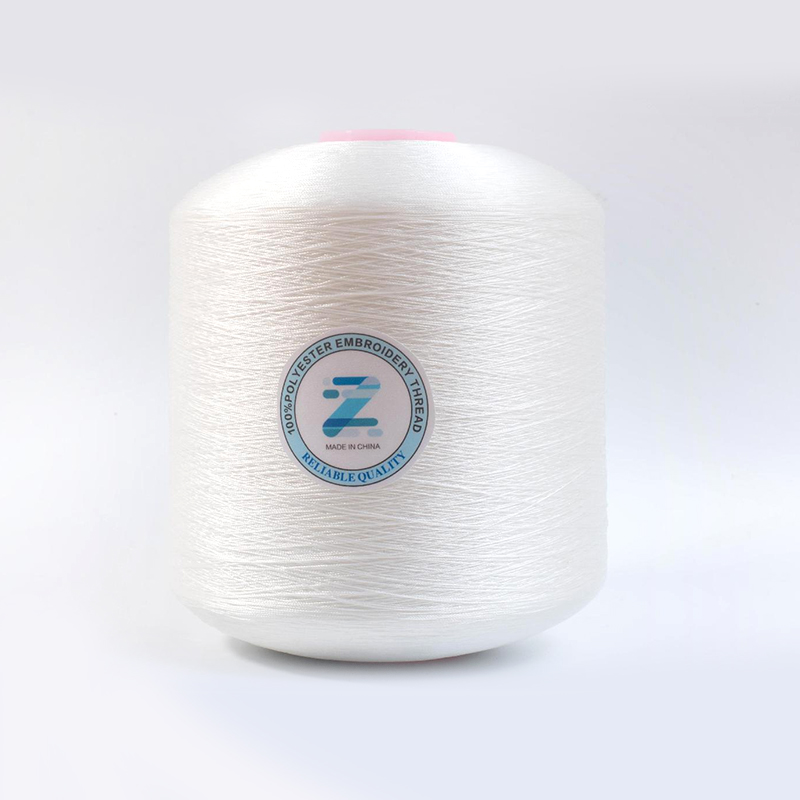 108d/2 100% Polyester Embroidery Thread with Sheen and DurabilityThis fine 40-weight polyester embroidery thread offers the strength and colorfastness mentioned earlier, reducing breaks and lint for smooth high-speed stitching on commercial machines.View Product →
If you are working with denim, knits, automotive interiors, or any item that gets a lot of wear, polyester is often the safer choice. There is also a middle ground: core-spun or poly-cotton thread. These are made with a polyester core and a cotton wrap, giving you the strength of polyester with a softer, more natural hand. They are common in high-quality sewing threads for garments and jeans.
 20/2 and 20/3 Poly-Poly Core Spun Sewing Thread for Heavy FabricsIdeal for denim and leather, this core-spun thread blends polyester strength with a softer hand, providing the resilience and uniformity needed in production environments.View Product →
For delicate or sheer fabrics, a cotton thread can create a flatter seam, while a fine polyester thread offers elasticity that moves with the cloth. For heavy materials such as canvas or leather, polyester is usually the stronger option. When you are buying thread in bulk for a production environment, consistency matters as much as fiber type. Polyester thread is often chosen for its batch-to-batch uniformity and resistance to breakage on high-speed machines. Cotton thread can vary with harvest conditions, so it is more common in artisan and quilting lines.
| Property | Cotton Thread | Polyester Thread |
|---|---|---|
| Fiber origin | Natural cellulose | Synthetic polymer |
| Feel | Soft, sometimes fuzzy | Smooth, slippery |
| Luster | Matte | Shiny to semi-gloss |
| Burn test | Burns to soft gray ash, paper smell | Melts to hard bead, plastic smell |
| Wet strength | Weakens when wet | Holds strength when wet |
| Abrasion resistance | Low | High |
| Elasticity | Minimal | Moderate |
| Best uses | Quilting, natural fabrics, hand stitching | Embroidery, stretch fabrics, outerwear, denim |
Next time you pick up a spool without a label, you do not need a lab test. Start with a close look and feel, then do a small burn test if you can. Once you know which fiber you have, you can make smart decisions about needle choice, tension, temperature, and where the finished item will live. And if you need a reliable supply of polyester embroidery thread or sewing thread, we have been manufacturing these products for years — we are always happy to answer technical questions.
Your email address will not be published. Required fields are marked *
*Indicates a required field
Copyright © Shaoxing Qiufei Textile Technology Co., Ltd.  Custom Embroidery Thread Yarn Manufacturers